As a longtime player, I've always seen Clash of Clans as a vibrant, strategic battleground on my phone screen. But with the release of the first-ever graphic novel series, Books of Clash, the universe I've spent over a decade building and battling in has suddenly gained a new dimension—one of personal stories, cultural clashes, and emotional depth. Supercell's venture into graphic novels isn't just a marketing ploy; it's an ambitious attempt to weave the connective tissue between the game's mechanics and the human experiences that resonate with its global fanbase.
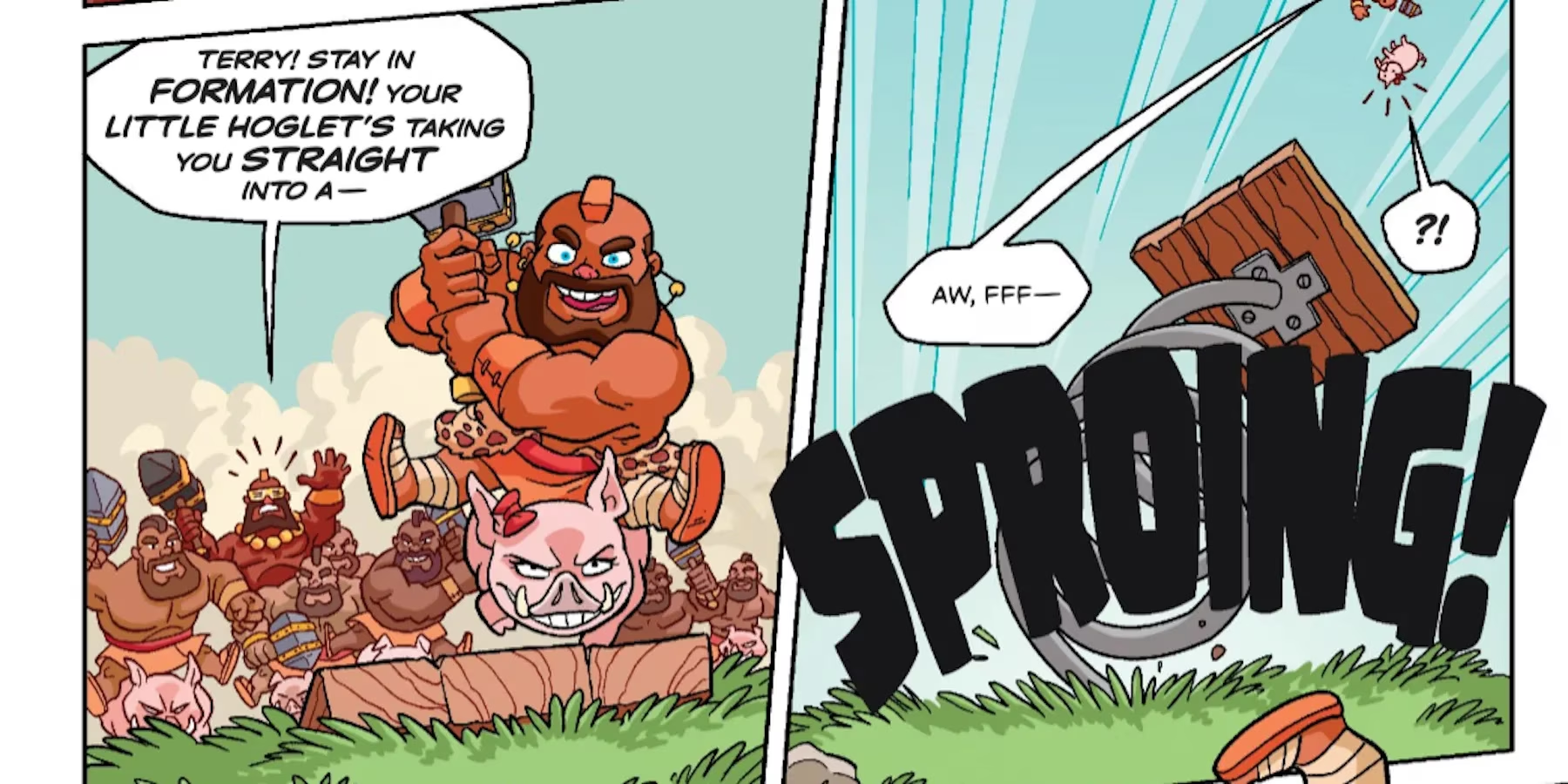
🐗 The Hog Rider's Journey: From Triumph to Identity Crisis
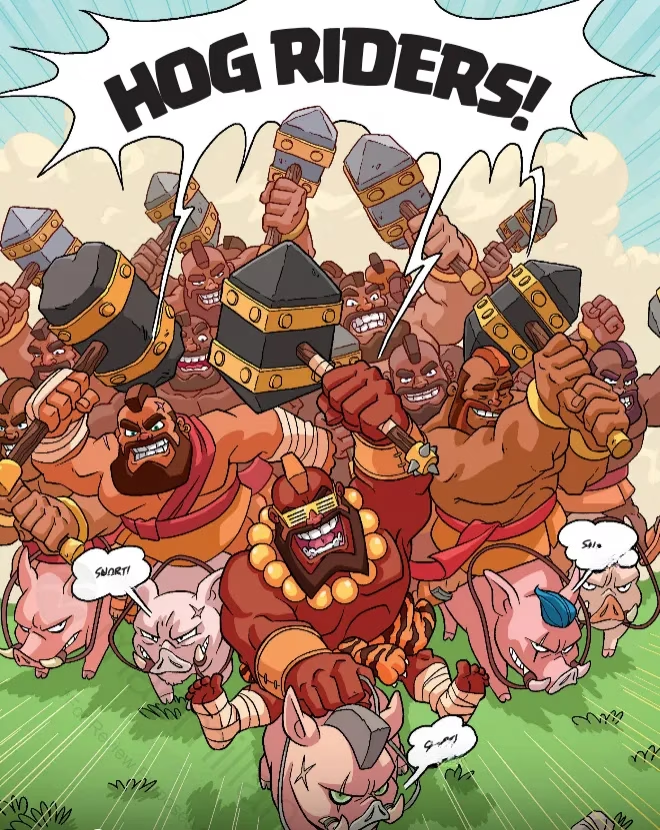
In the game, Hog Riders are a tactical tool, fast units that leap over walls to disrupt defenses. In Books of Clash Volume 1, they become characters with aspirations and insecurities. We follow Terry (Terrodicus), a young Hog Rider desperate for his brother Rokkus's approval. His initial, reckless attack on Jazzypickleton ends in humiliating defeat, forcing him to flee. This moment is as jarring as a castle wall crumbling from a single, well-placed Earthquake spell—it shatters his preconceived world.
Terry's subsequent infiltration of Jazzypickleton as a "spy" becomes the heart of the story. He encounters a village where Archers, Barbarians, Giants, and more coexist peacefully. His internal monologue, "Every kind of troop is here. All mingling with each other like it's normal," echoes the culture shock many feel when stepping outside their bubble. For me, this transformation was like watching a carefully cultivated base, built on a single strategy, being redesigned to incorporate a whole new, more versatile army composition. Terry's journey from blind allegiance to questioning his clan's "way" is the graphic novel's core.
🎓 Personal History as Narrative Blueprint
Graphic novelist Gene Luen Yang didn't just adapt game lore; he mined his own life. He drew a direct parallel between Terry's experience and his own move from a homogenous San Jose suburb to the diverse University of California, Berkeley.
Yang's Reflection: "I wanted Terry to go through something similar... For him, Jazzypickleton is sort of like what UC Berkeley was for me. Then his one way of doing things gets challenged and he grows as a character."
This personal touch elevates the story. Terry's conflict with his brother Rokkus mirrors Yang's own experience defying his immigrant parents' expectations of becoming a doctor or lawyer to pursue comic creation. When Rokkus dismisses the mixed village as a "cesspool," Terry's hesitant agreement ("Y-Yeah. Uh... Yuck.") captures the painful tension between familial loyalty and personal growth. This emotional arc is the series' secret weapon, transforming pixels into relatable people.
🌍 Building Bridges, One Emote at a Time
Yang highlights a beautiful, often-overlooked aspect of Clash of Clans: its function as a cultural bridge. He admits he's not a top player, but finds joy in seeing opponent names in Korean, Russian, or other languages. The game's global clan system—where 30-50 players chat, donate troops, and wage war together—creates micro-communities that transcend borders.
Yang's Hope: "The game itself builds these bridges across cultural divides... I hope that comes across in the book as well."
This theme manifests cleverly in the graphic novel. When Goblins appear, their speech bubbles are in an untranslated script, visually representing the "other." Yang suggests that even the game's limited communication through emotes can foster a "small way" of knowing someone from another culture. Terry's entire arc is about overcoming stereotypes, a process as delicate and transformative as upgrading a Hero ability—it requires patience and changes your entire approach to conflict.
📚 The Future of the Clash Universe
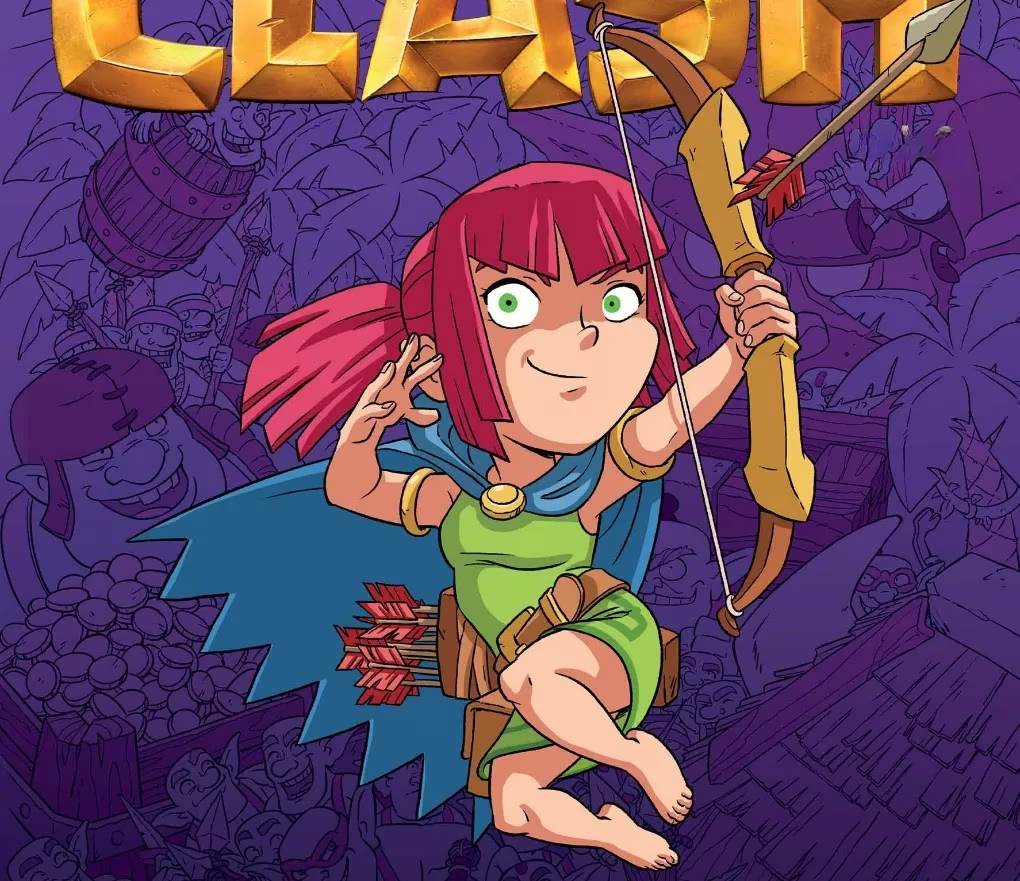
Books of Clash does more than tell a side story; it deepens our emotional investment. After a decade, characters like the Hog Rider or the Archer are more than unit portraits. Volume 2's promised focus on Terry's Archer friend, Jane, suggests an expanding tapestry of perspectives.
For the franchise's longevity, this is a masterstroke. It combines the game's quirky charm (the absurdity of hog-riding warriors) with serious themes of identity, community, and prejudice. It's akin to discovering a hidden, fully-rendered village behind the game's iconic interface—the world was always there, just waiting for the right storyteller to reveal its depths.
As a player in 2026, seeing this universe mature is thrilling. The graphic novel feels like a long-awaited Clan Castle reinforcement, arriving not with troops, but with heart and history, ensuring the Clash universe remains defended not just by walls and cannons, but by stories worth protecting.
Comments