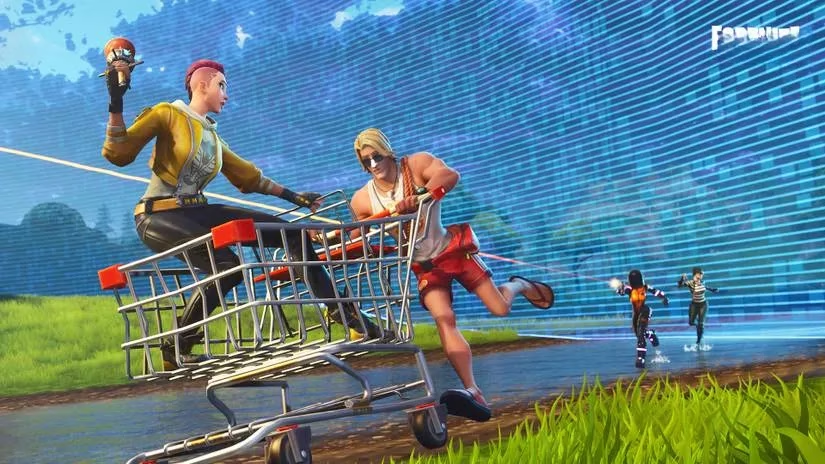
Reflecting on the gaming landscape of 2018, a year filled with monumental announcements and reveals, the most surprising fact for me wasn't necessarily the new games announced, but which trailer ended up capturing the most attention. In a year where E3 brought us glimpses of legendary titles like The Elder Scrolls VI, the futuristic world of Cyberpunk 2077, and the stunning visuals of Ghost of Tsushima, you'd expect one of these new giants to claim the throne. Yet, the crown for the most viewed YouTube game trailer that year went not to a new reveal, but to a game that had already been out: Fortnite Battle Royale. Its fifth season announcement trailer amassed a staggering 48.6 million views in under six months, a testament to the cultural juggernaut it had become. It's a fascinating case study in how a live-service game's ongoing narrative can generate more excitement than the initial reveal of brand-new blockbusters.
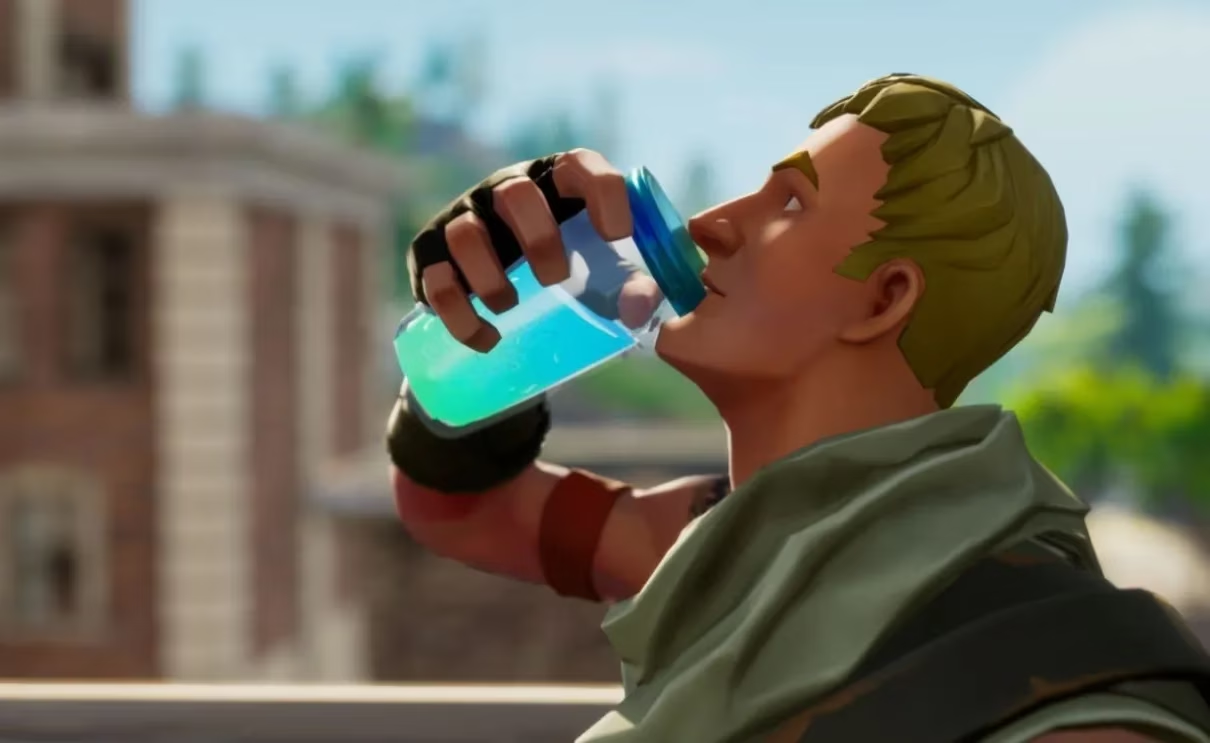
The sheer scale of Fortnite's reach was the real story. According to analyses at the time, the game didn't just have the top spot; it dominated the entire conversation. I remember reading that five out of the top ten most-viewed game trailers on YouTube that year originated from the official Fortnite channel. This wasn't a one-hit wonder; it was a sustained, multi-seasonal marketing and content machine that kept players and spectators hooked. The game had evolved from its late 2017 Battle Royale launch into a full-blown social platform, and its trailers were major seasonal events, promising new maps, mechanics, and crossovers. This consistent, high-quality content pipeline created a level of engagement that traditional, one-and-done game trailers simply couldn't match.
Following Fortnite, the list showcased a fascinating mix of anticipation and established powerhouses. In second and third place were two of the year's most talked-about major releases: Fallout 76 and Red Dead Redemption 2. It's a stark contrast in retrospect. Red Dead Redemption 2's trailer, with its 27.9 million views, promised and later delivered a cinematic masterpiece, a deep, narrative-driven experience. Fallout 76's trailer, garnering 33.8 million views, sold the dream of a shared-world Appalachia, a concept that, despite its rocky launch, captured immense initial curiosity. Their placement highlights that trailer views are a measure of hype and potential, not always a direct correlation to final critical reception or player satisfaction.
The rest of the top-viewed trailer list read like a snapshot of the 2018 gaming ecosystem, showing diverse avenues for success:
-
Mobile Titans: Clash of Clans: Hammer Jam and Clash Royale: Clan Wars is Here proved the enduring, massive audiences for top-tier mobile games. Their trailers were major events for their dedicated communities.
-
PC Powerhouses: League of Legends: Just One More and Minecraft's Aquatic Update represented the ever-evolving world of PC gaming. These weren't new games, but significant updates that reinvigorated their player bases, showing that ongoing support drives consistent viewership.
-
Console & Multiplatform Blockbusters: Trailers for DOOM Eternal, GTA Online: After Hours, and Call of Duty: Black Ops 4 Blackout Reveal rounded out the list. Each catered to a specific, hardcore audience—fast-paced FPS fans, persistent open-world players, and the Battle Royale-curious Call of Duty crowd, respectively.
What's always struck me about this list is the notable absence of some heavy hitters. For instance, the deeply anticipated Cyberpunk 2077 gameplay trailer, which I personally watched dozens of times, "only" managed 12.1 million views—enough to make headlines but not enough to crack that top tier dominated by live-service and multiplayer-focused titles. This really underlined a shift: the most-viewed trailers were often for games that promised ongoing, shared experiences rather than finite, single-player journeys.
From my perspective, Fortnite's 2018 trailer victory was both unsurprising and profoundly impressive. It signaled a new era. The game wasn't just popular; it was a unifying pop culture phenomenon. Whether you loved its building mechanics, despised its cartoony aesthetics, or just did the default dance ironically, you couldn't ignore it. It became the de facto social space for a generation. Its trailers were less about selling a product and more about announcing the next chapter in a persistent, evolving world. Looking back from 2025, the trends that 2018 highlighted—the power of live services, the importance of community-driven content cycles, and the blurring line between game and social platform—have only accelerated. Fortnite didn't just win the trailer views battle that year; it provided a blueprint that much of the industry is still trying to follow, adapt, or counter today. It truly was, and in many ways remains, an absolute monster of a video game icon.
Comments