The mobile gaming landscape is constantly shifting, but some deals are so massive they send shockwaves through the entire industry. Remember back in 2016 when rumors were flying about a Chinese tech giant eyeing one of Finland's crown jewels? Well, those rumors became a reality that reshaped the market for years to come. The news that Tencent Holdings, already a titan with stakes in giants like Riot Games, had officially acquired a controlling stake in Supercell for a staggering $8.6 billion wasn't just a business transaction—it was a statement of intent on a global scale. This deal, finalized back then, pushed Tencent's total ownership to a dominant 84.3% of Supercell's shares, valuing the Finnish studio and its legendary IPs at over $10 billion. Talk about a power move! 🤯
Why Did This Deal Make So Many Headlines?
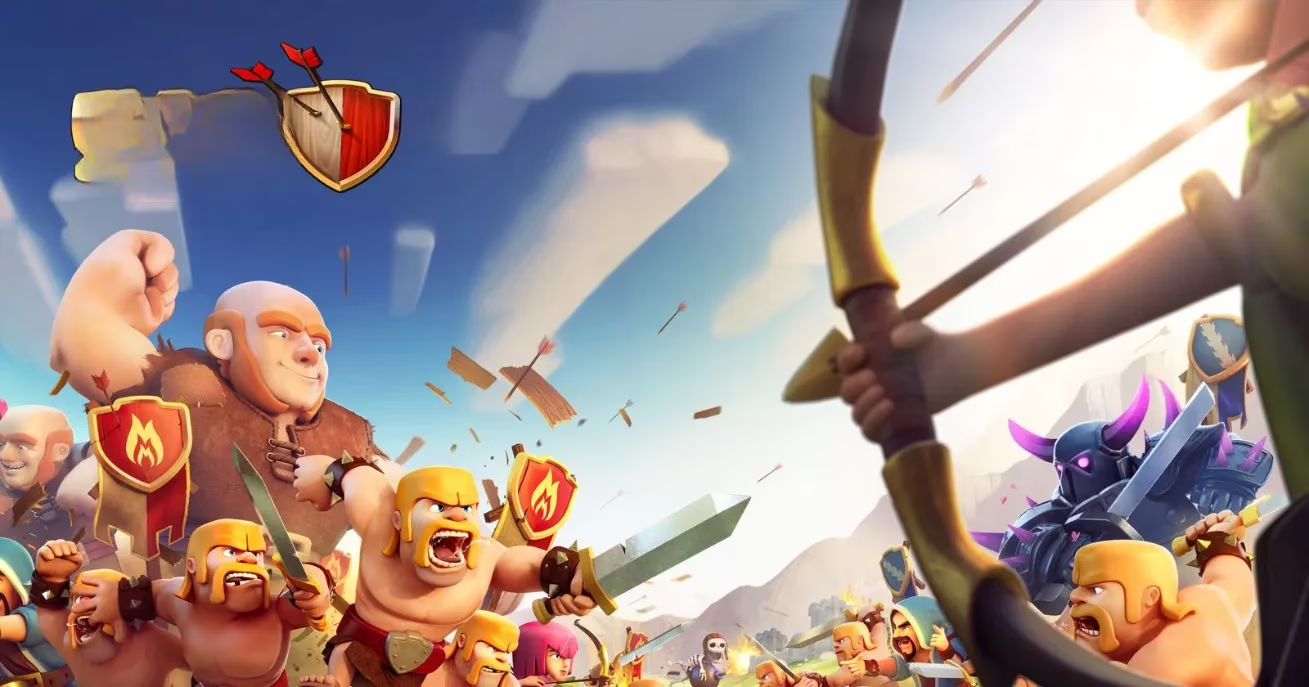
Let's break it down. This wasn't just any purchase. Think about it: Tencent, a Chinese conglomerate, acquiring the company behind Clash of Clans from its previous major owner, the Japanese giant SoftBank. SoftBank had held a 51% stake after a previous $1.5 billion deal. The $8.6 billion price tag alone was mind-boggling for the mobile game sector at the time. It signaled that top-tier mobile game studios with global hits were now considered premium strategic assets, worthy of valuations previously reserved for major console publishers or social media platforms. This transaction single-handedly reset the market's perception of what a mobile-first game company could be worth.
What Did Supercell Bring to the Table?
The answer is simple: a track record of creating global cultural phenomena. Based in Helsinki, Finland, Supercell wasn't just a one-hit-wonder. By 2016, they had a portfolio of games that were daily habits for millions:
-
Clash of Clans: The undisputed king of mobile strategy for years.
-
Boom Beach: Another solid strategy title that carved out its own loyal fanbase.
-
Clash Royale: A newer, explosive hit that blended card collection with real-time PvP, proving Supercell's innovation wasn't a fluke.
CEO Ilkka Paananen's statement at the time perfectly captured the studio's ethos. He talked about chasing a dream of creating games that people would play "for decades" and building a "rich history of games." They had already achieved incredible success with over 100 million daily players across their four titles, but they viewed themselves as just at the beginning of a "very long journey." This long-term vision is precisely what made them an attractive partner for a company like Tencent, which is known for its strategic, long-game investments.
The Big Question: What Did Tencent Really Want?
Tencent wasn't just buying daily active users or revenue streams (though those were certainly attractive). They were acquiring expertise and IP. Let's look at the strategic benefits:
-
Global Footprint: Supercell's games were massive in Western markets, an area where Tencent wanted deeper roots.
-
Development Philosophy: Supercell's "small, independent team" model that focused on quality over quantity was a proven success formula worth studying and protecting.
-
IP Portfolio: Control over the Clash universe and other potential franchises offered endless possibilities for expansion into esports, merchandise, and media.
Crucially, Tencent promised that Supercell would "maintain operational independence." This was a masterstroke. Instead of absorbing and potentially stifling the creative culture that made Supercell successful, Tencent positioned itself as a supportive parent company providing resources and access to the vast Chinese market, while letting the Finnish teams do what they do best. It was a partnership model focused on synergy, not control.
How Did This Deal Shape the Gaming World?
Looking back from 2025, the impact of this acquisition is clear. It set a precedent for major tech and gaming conglomerates to invest heavily in Western mobile developers. It validated the free-to-play model as not just profitable, but capable of generating IP with the longevity of traditional console franchises. Furthermore, it helped cement Tencent's position as arguably the most powerful and influential company in the global games industry, with a portfolio spanning from PC MOBAs (League of Legends) to mobile strategy juggernauts (Clash of Clans).
The partnership allowed Supercell to continue its journey, later releasing games like Brawl Stars, which became another global hit. The "long journey" Paananen spoke of continues, now backed by one of the world's largest tech ecosystems. So, the next time you log into your favorite mobile game, remember that the landscape you're playing in was significantly defined by deals like this one—where East met West, strategy met creativity, and $8.6 billion bought a dream of decades of play. 💥🎮
Comments